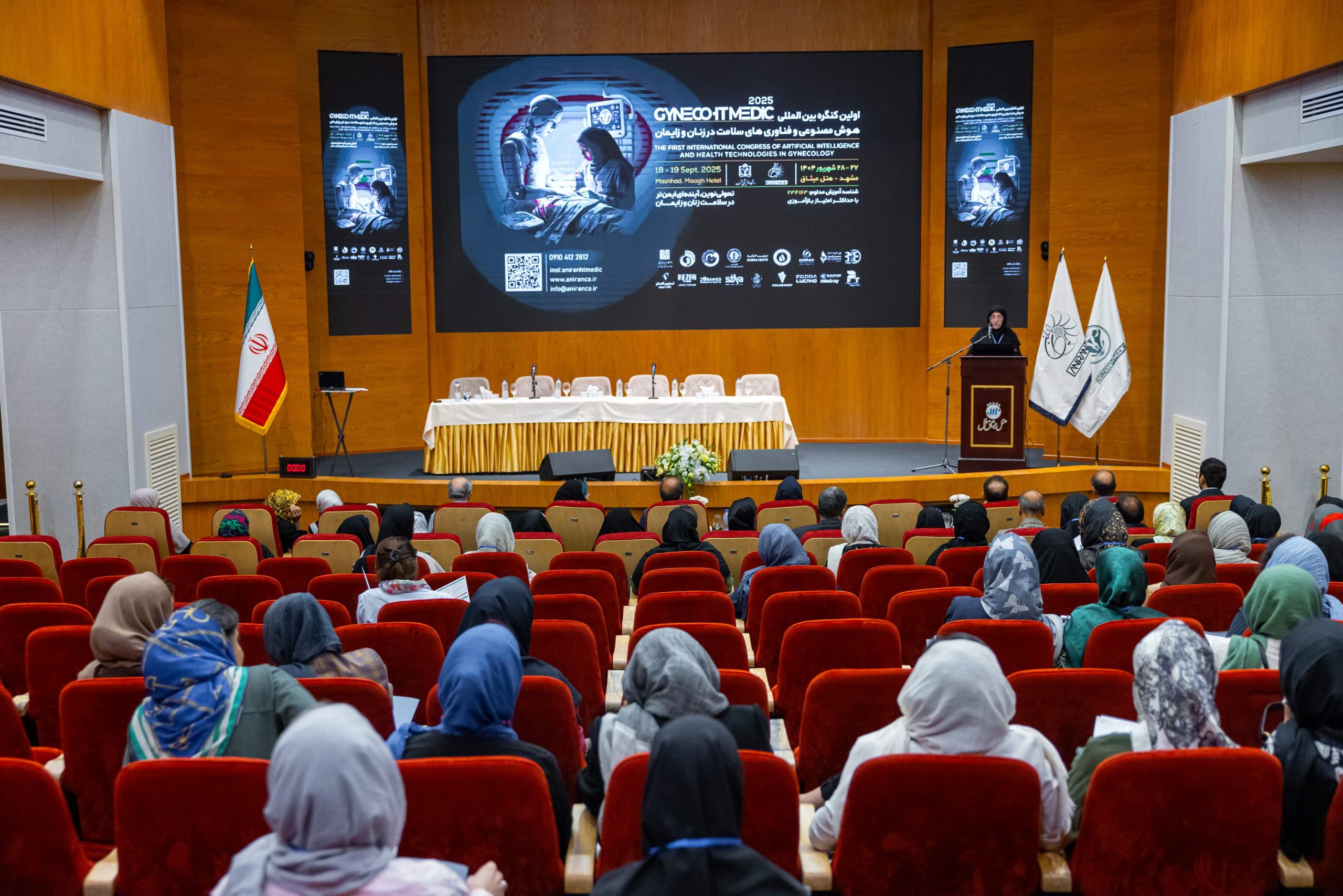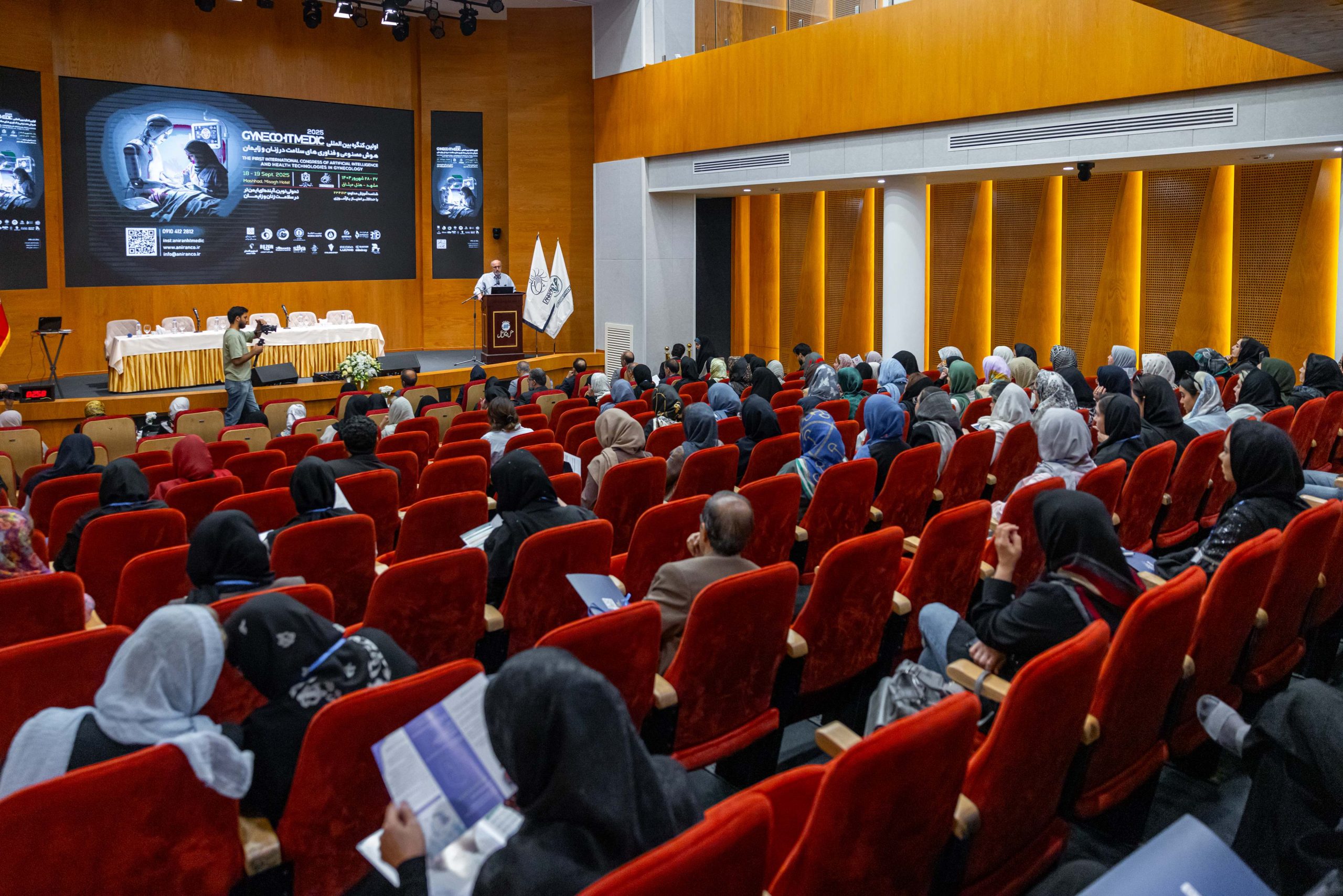


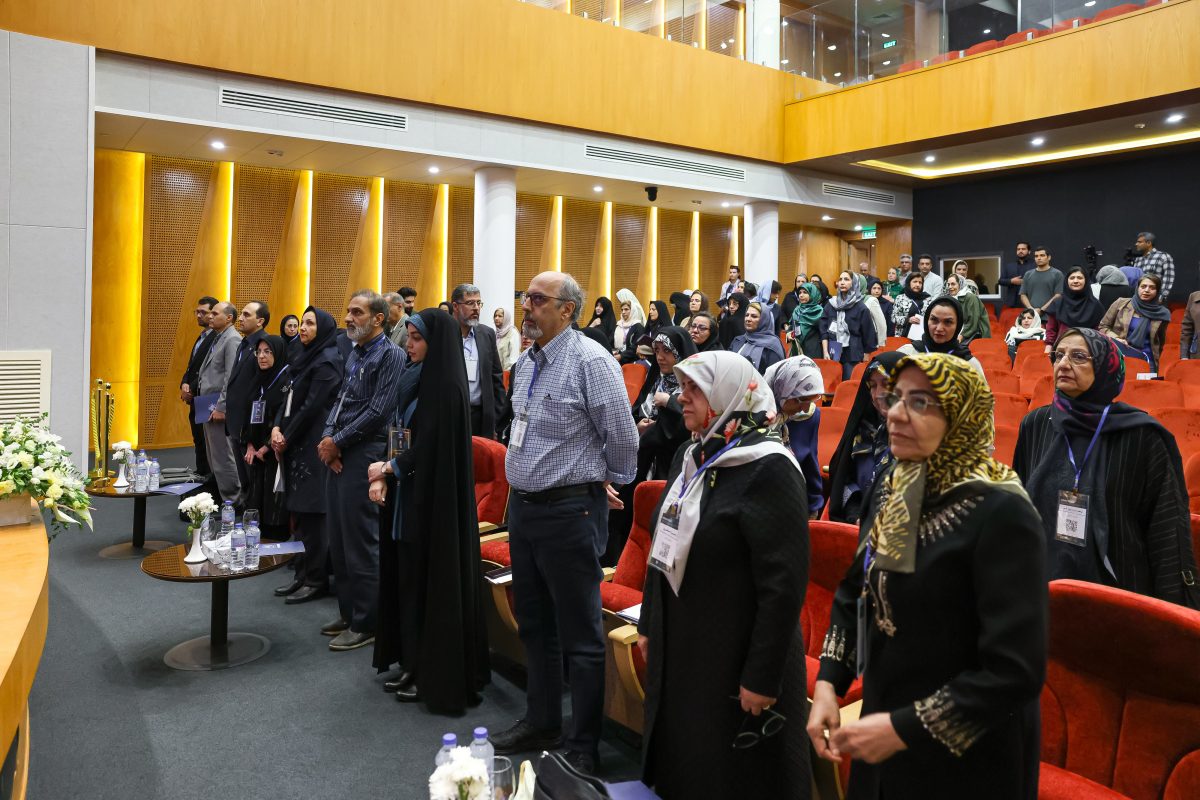
The First International Congress on Artificial Intelligence and Health Technologies in Obstetrics and Gynecology was held this morning (Thursday, September 17, 2025) at the Misagh Hotel Conference Hall in Mashhad. The event was attended by Emadodin Fatemizadeh, Head of the Secretariat of the AI Technology Development Headquarters, Seyed Ali Alamdaran, Deputy of Education at Mashhad University of Medical Sciences, and a number of health officials and specialists in obstetrics and gynecology from across the country.
The two-day congress focuses on specialized panels, expert brainstorming sessions in obstetrics and gynecology, and exploring interactive models of artificial intelligence and health technologies.
Artificial Intelligence, a Guiding Light for Physicians in the Modern Era
At the beginning of the ceremony, Nafiseh Saghafi, Chair of the International Congress on AI and Health Technologies in Obstetrics and Gynecology, stated: “I will examine the impact of AI on obstetrics and gynecology from two perspectives. First, AI is not a new phenomenon. Although this active and expressive technology has recently gained attention in Iran, it was first conceptualized in 1950 by an English mathematician who proposed the idea of a self-thinking machine.”
She added: “Second, medicine is a dynamic field full of innovations. It is one of the sciences where reference books are quickly outdated and new texts are constantly needed. Medicine, like a flowing river, must keep moving forward; if it stagnates, it risks becoming stagnant and unproductive.”
The congress chair emphasized: “All scientific advancements reflect this reality. We can all recall a time in our country when even ultrasound devices were unavailable. Now, portable ultrasound machines are being produced. AI is similar—an emerging technology that can assist humans and, by mimicking human thought, accelerate the progress of science.”
She continued: “Today’s program reflects this theme. AI offers a boundless world that, if used correctly, is not something to fear, but a valuable tool. In fetal diagnostics, prognosis, and infertility, AI is a powerful ally. Today, it can even outperform some paraclinical tools. AI is a reliable assistant, provided data is supplied ethically and professionally, guiding us along a much easier and more effective path of growth.”
The Head of the Secretariat of the AI Technology Development Headquarters also highlighted that since the 1970s, there have been remarkable changes in medical knowledge. Recent technological advancements are influencing all areas, particularly medicine. Current models are significantly enhancing therapeutic applications in trials, and highly effective tools in fields like radiology are designed not to replace humans but to place humans in the role of decision-makers.
He noted: “The use of AI in early pattern recognition, faster service delivery, reduction of human errors, personalized treatment, and early screening is rapidly advancing. In obstetrics and gynecology, AI applications are emerging in pregnancy and prenatal care, maternal health, female cancers, and future intelligent assistants. For example, AI-based tools are being developed to provide mothers with guidance comparable to a physician’s expertise in obstetrics and gynecology.”
Fatemizadeh emphasized: “We believe that within two years, the tangible impact of this international congress will be clear. The priorities and needs in this area will be identified, and the Vice Presidency for Science and Technology will provide special support to knowledge-based companies in this field.”
Submission of 70 Specialized Papers to the Congress Secretariat
In this event, Leili Hafizi, Scientific Secretary of the International Congress on AI and Health Technologies in Obstetrics and Gynecology, stressed that AI is rapidly advancing, and it is expected that in the near future, those who adopt this technology will thrive, while those who fall behind will be left behind.
She added: “This congress is an extraordinary opportunity to improve the quality of medical care. From diagnostics to education and research, models will be discussed and reviewed, serving as a milestone for future gatherings. More than 70 papers have been submitted to the congress secretariat, of which 30 will be selected for publication in the Iranian Journal of Women and Infertility.”